
PED Risk Management
Straight answers about what you’re taking.
Monitoring and risk review for people who use, or are considering, performance-enhancing drugs. No judgment, and no lecture.
No judgment
You’ll get the same care whether you started last month or ten years ago. An honest picture helps us help you.
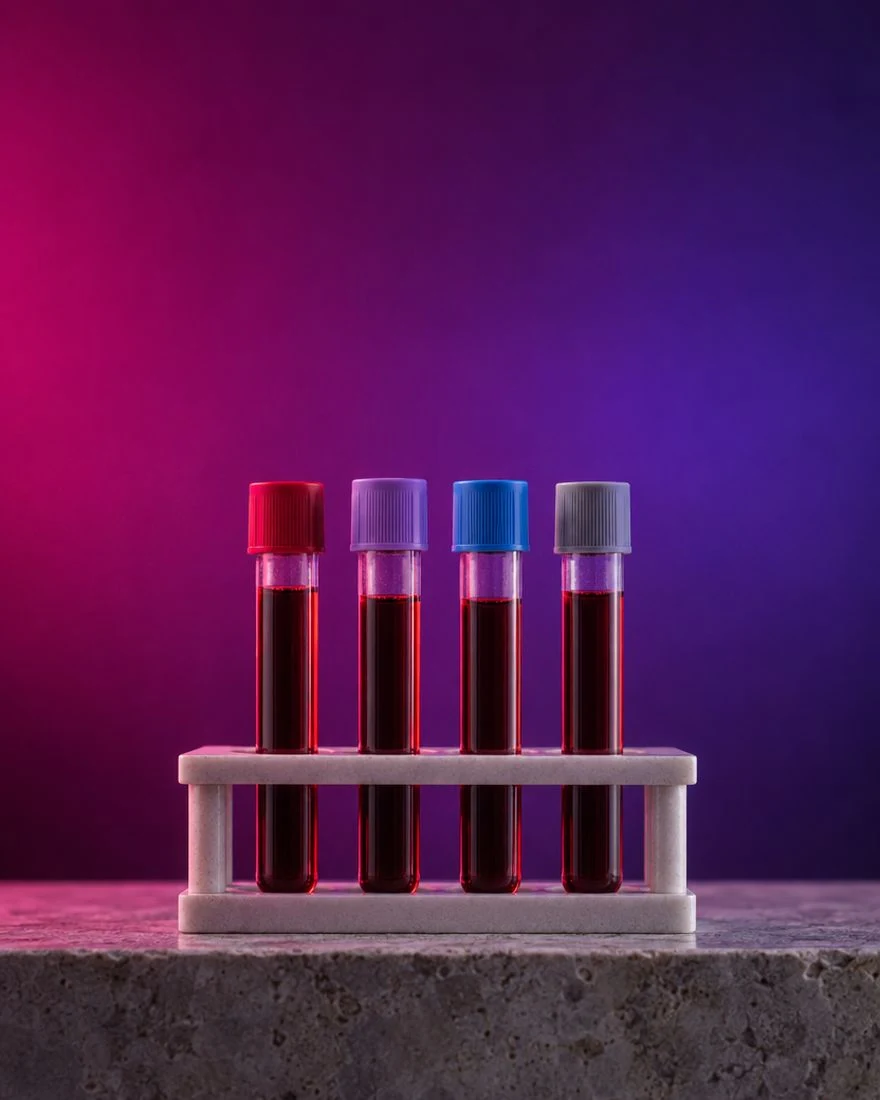
Bloodwork on a schedule
Before, during and after — so problems show up on paper before they show up in your body.
Your heart first
Blood pressure, cholesterol and blood thickness are where serious risks build quietly.
Why monitoring matters
If you’re going to use them, you should know what they’re doing.
People use performance-enhancing drugs. Pretending otherwise doesn’t make anyone safer — it just means the monitoring doesn’t happen.
The most serious risks build without symptoms: thickened blood, rising blood pressure, worsening cholesterol, strain on the liver and kidneys, and shutdown of your body’s own testosterone. Bloodwork catches them while there’s still time to act.
Who this is for
- Currently using
- Planning a cycle
- Coming off
- Off, but not recovered
- Worried about your bloodwork
- Thinking about fertility
Treatment
What the service covers
This is monitoring and risk review. It isn’t an endorsement, and it isn’t a prescription.
- Evaluation
Baseline Risk Review
What you’re taking, how much, for how long, and where it comes from — reviewed without judgment.
- Your history, blood pressure and baseline labs
- A clear picture of where your risks sit
- Ongoing
Monitoring Bloodwork
Blood counts, lipids, liver, kidney and hormone markers on a schedule matched to what you use.
- Typically every 8–12 weeks while using
- Sooner after changes or new symptoms
- Evaluation
Heart & Blood Pressure
The risks that matter most over time, checked properly and referred on when they need a cardiologist.
- Blood pressure, lipids and blood thickness
- ECG or cardiology referral when warranted
- Ongoing
Coming-Off Plan
If you want to stop, we’ll help you plan it and monitor your body’s own hormone production as it recovers.
- Recovery tracked with labs
- Mood and energy checked along the way
- Evaluation
Fertility Check
PEDs commonly suppress sperm production. If children are in your future, we’ll check where you stand.
- Semen analysis and hormone testing
- Referral when you need a specialist
Monitoring isn’t an endorsement of any drug, dose or source. Whether any prescription is appropriate is a separate clinical decision, made like any other.
Labs
Lab work at cost, ordered for a reason.
Labs are here to answer questions about you. Most clinics mark up lab work. We don’t. You pay what the lab charges us, and there’s no fee for your physician to interpret your results.
The foundation.
Built for athletes, and for anyone who wants a deeper look at their health.
Illustrative screens.
Listed in the order that matters most for PED risk management.
Blood & organ functionAre your blood, liver and kidneys in good shape?ComprehensiveAdvanced
In both panels
- CBC
- CMP
Blood counts, including hematocrit, plus kidney and liver function.
Added in Advanced
- Cystatin C
- GGT
- Urinalysis
Adds a kidney test that isn’t thrown off by muscle mass, a liver enzyme, and a urine screen.
Heart & cholesterolDoes your cholesterol tell the whole story?ComprehensiveAdvanced
In both panels
- Lipid panel
Cholesterol and triglycerides.
Added in Advanced
- ApoB
- CRP
Adds ApoB, the particle count most closely tied to heart disease, and a marker of inflammation.
HormonesIs a hormone actually low, and where does the problem start?ComprehensiveAdvanced
In both panels
- Total testosterone
- Free testosterone
- Estradiol
- LH
- FSH
- Prolactin
Testosterone, estrogen, and the pituitary signals that control them.
Added in Advanced
- Estradiol (LC/MS)
- Progesterone
- DHEA
Adds a more precise estradiol test, plus progesterone and DHEA.
Prostate · for menWhat’s your prostate baseline?ComprehensiveAdvanced
In both panels
- PSA
PSA, typically checked before and during testosterone therapy.
Advanced
Checked the same way.
Blood sugarHow well does your body handle sugar?ComprehensiveAdvanced
In both panels
- Glucose (in CMP)
One fasting glucose reading.
Added in Advanced
- Fasting insulin
- Hemoglobin A1c
Adds your average over roughly three months, and how much insulin it takes to keep you in range.
ThyroidCould your thyroid explain how you feel?ComprehensiveAdvanced
In both panels
- TSH
A screening test for thyroid function.
Advanced
Checked the same way.
Muscle & recoveryIs hard training showing up in your results?ComprehensiveAdvanced
Added in Advanced
- Creatine kinase
Creatine kinase, which hard training raises. That matters when reading your other results.
Vitamins, minerals & ironAre you low on something that affects energy and recovery?ComprehensiveAdvanced
Added in Advanced
- Vitamin D
- Ferritin
- Magnesium
Vitamin D, iron stores and magnesium.
Tap a row to see the tests.
Advanced is a starting point, not a fixed list. Tests can be added or removed with your physician so the panel fits what you’re trying to answer.
What each test tells you
- Total testosterone
- The total amount of testosterone in your blood.
- Free testosterone
- The share that isn’t bound to proteins and is available to your tissues.
- Estradiol
- The main estrogen. It matters in men too, and it can rise on testosterone therapy.
- Estradiol (LC/MS)
- The same hormone measured by mass spectrometry, a more precise method at low levels.
- LH & FSH
- Signals from the pituitary gland that tell the body to make sex hormones. They help show where a problem starts.
- Prolactin
- A pituitary hormone that can lower testosterone and libido when it runs high.
- Progesterone
- A reproductive hormone, measured when your history makes it relevant.
- DHEA
- A hormone made mainly by the adrenal glands, which the body uses to make testosterone and estrogen.
- TSH
- A screening test for thyroid function.
- PSA
- A prostate marker for men, typically checked before and during testosterone therapy.
- CBC
- Complete blood count: red and white cells and platelets, including hematocrit.
- CMP
- Comprehensive metabolic panel: kidney and liver function, electrolytes and blood sugar.
- Lipid panel
- Cholesterol and triglycerides.
- ApoB
- A count of the cholesterol-carrying particles most closely tied to heart disease.
- CRP
- A general marker of inflammation.
- Fasting insulin
- How much insulin your body needs to keep fasting blood sugar in range.
- Hemoglobin A1c
- Your average blood sugar over roughly the past three months.
- Cystatin C
- A kidney function test that isn’t thrown off by muscle mass the way creatinine can be.
- GGT
- A liver enzyme that adds detail to the standard liver tests.
- Urinalysis
- A basic screen of the urine for kidney and urinary signs.
- Vitamin D
- Your vitamin D level.
- Ferritin
- Your body’s iron stores.
- Magnesium
- A mineral involved in muscle, nerve and energy metabolism.
- Creatine kinase
- An enzyme released from muscle. Hard training raises it, which matters when reading other results.
No markup on labs, no fee to read them.
What we monitor
- Hematocrit and blood counts
- Cholesterol and lipids
- Liver and kidney markers
- Blood pressure
- Testosterone, estradiol and related hormones
- PSA, when age-appropriate
Get urgent care if you have
- Chest pain or sudden shortness of breath
- A severe headache, weakness, or vision changes
- Yellowing of the skin or eyes
- Sudden swelling or pain in one leg
- Low mood that feels dangerous — call or text 988
How it works
Four steps, one physician.
- 01
Tell us what changed.
Symptoms, training, sleep, medications, and what you’ve already tried.
- 02
Get the right labs.
Targeted testing based on your history — the Comprehensive or Advanced panel, whichever answers your questions.
- 03
Talk it through with a physician.
What the results mean, what’s reversible, and whether medication would actually help.
- 04
Leave with a plan.
Sometimes that’s a prescription. Sometimes it’s training, sleep, and a recheck in ninety days.
- Physician video visitsTime with the physician — not a questionnaire and a signature.
- A written planTreatment, training, sleep, and what we’re rechecking.
- Labs when they’re warrantedWith the cost shown before anything is ordered.
- Scheduled monitoringRechecks on a timeline, so nothing quietly drifts.
- Training, nutrition & sleepIncluded, because it’s what makes the rest work.
- A straight answerIncluding that you don’t need treatment, when that’s the truth.
Questions
Asked often.
Something else on your mind? Ask at your intake visit and you’ll get a straight answer.
All questions →Will you judge me?
No. Our job is to keep you as safe as possible with the choices you’re making, and that only works if you can be honest with us.
Do I have to tell you everything I’m taking?
The more accurate the picture, the more useful the monitoring. Doses, compounds, timing and sources all change which risks we watch for.
How often should I get bloodwork?
Usually before you start, during use — often every 8 to 12 weeks — and after you stop. We’ll set a schedule based on what you’re taking.
Can you help me come off?
Yes. We’ll help you plan it, monitor your body’s own hormone production as it recovers, and keep an eye on mood and energy along the way.
Will you prescribe performance-enhancing drugs?
This service is about monitoring and reducing risk. Whether any prescription is appropriate is a separate clinical decision, made the same way as any other.
Related care